
A Delhi house move can involve much more than the distance between two addresses. A truck that reaches a Dwarka apartment gate easily may be unsuitable for a lane in Shahdara or an older walk-up in Karol Bagh. Summer heat, winter fog and neighbourhood parking all affect how the day unfolds. When comparing packers and movers in Delhi, describe both buildings before discussing a final price: floor numbers, working lifts, lane width and the distance from parking to the door matter. This guide covers budgets, packing, paperwork and journeys across NCR or farther away.
Planning a move around Delhi’s buildings and roads
Start with access, rather than a map estimate. Two homes only a few kilometres apart can require several hours of carrying if one has steep stairs and the other has a restricted service lift. Share photographs of the entrance, stair turns and largest furniture pieces during the survey. In older builder floors, a large wardrobe may need dismantling before it can pass through the landing; discovering that after the vehicle arrives wastes both time and money.
Ask packers and movers in Delhi to explain the proposed vehicle and loading arrangement. A smaller vehicle or shuttle may be practical where a larger goods vehicle cannot reach the building, but the extra handling should be priced beforehand. Goods-vehicle access can depend on vehicle category, route and current restrictions. Have the operator check the applicable arrangements for your journey rather than relying on a blanket promise that an early departure solves everything.
Build your schedule around possession and permission, not just the booking date. Confirm when the old landlord expects the keys, when the new home is actually available and whether either residents’ association needs advance notice. Keep some overlap between homes where possible. If painting, cleaning or electrical work remains unfinished at the destination, paying for a short delay may be preferable to stacking cartons among wet walls and tradespeople.
What Delhi shifting quotes should cover
For a local move with ordinary access, a modest 1BHK may often cost roughly ₹4,000–₹9,000, a 2BHK around ₹7,000–₹16,000 and a 3BHK about ₹11,000–₹25,000. These are planning estimates, not fixed tariffs. A heavily furnished home, several flights of stairs, premium crockery packing or a long carry from the truck can change the total substantially. Confirm current prices with providers after an inventory survey, and check whether dismantling and reassembly are included.
For an intercity journey of roughly 250–600 kilometres, indicative household budgets may be around ₹12,000–₹24,000 for a 1BHK, ₹18,000–₹35,000 for a 2BHK and ₹25,000–₹50,000 for a 3BHK. Longer routes, such as Delhi to Bengaluru, can cost considerably more. Volume, destination access and whether the truck is dedicated or shared make these broad comparisons only. Ask for a route-specific estimate, the delivery window and any storage or transfer arrangements before committing.
Compare packers and movers in Delhi using the same inventory and service requirements. Request separate figures for packing, labour, transport, tolls, parking, taxes where applicable and optional transit cover. Ask whether cartons are purchased or returnable, and what happens if the crew needs another trip. An unusually low headline price is not useful if the balance is recalculated at your doorstep. Have the provider record which circumstances can trigger extra charges and how those charges will be agreed.
Access checks from Dwarka to the older city
In Dwarka and Rohini, apartment complexes may offer relatively clear internal roads, but entry still depends on the particular society. Reserve the service lift if available, check permitted shifting hours and ask where the truck can wait without blocking residents. Some buildings require lift protection or a refundable deposit. Obtain the actual requirements from the office or security desk; a mover’s experience in the next sector does not establish the rules for your own block.
Lajpat Nagar, Malviya Nagar and parts of Karol Bagh mix markets, parked cars and residential lanes. A site visit can reveal whether loading needs a smaller vehicle and whether furniture must travel a considerable distance by hand. In Shahjahanabad and around Chandni Chowk, tight lanes and busy commercial activity make an agreed loading point especially important. Do not assume the truck can wait outside the entrance simply because a passenger car has previously reached it.
For moves involving south Delhi, check how the chosen route interacts with the Ring Road, Outer Ring Road and busy approaches around Ashram. Across the city, school dispersal and office traffic can complicate a seemingly short run. Ask both buildings for a workable loading slot, then let the operator plan a lawful route within it. Avoid reserving public road space informally with household objects; arrange parking through the appropriate building contact or local authority where required.
Packing for dust, jolts and awkward staircases
Delhi dust makes closed cartons and clean wrapping worthwhile even on a short journey. Use suitable protective layers for upholstered furniture and keep bedding separate from shoes, tools and cleaning materials. Ask how the crew protects polished surfaces beneath outer wrapping, since grit trapped against wood can scratch it. Books should go into manageable cartons rather than one oversized box. Label each carton with its destination room and a short contents note that someone else can understand.
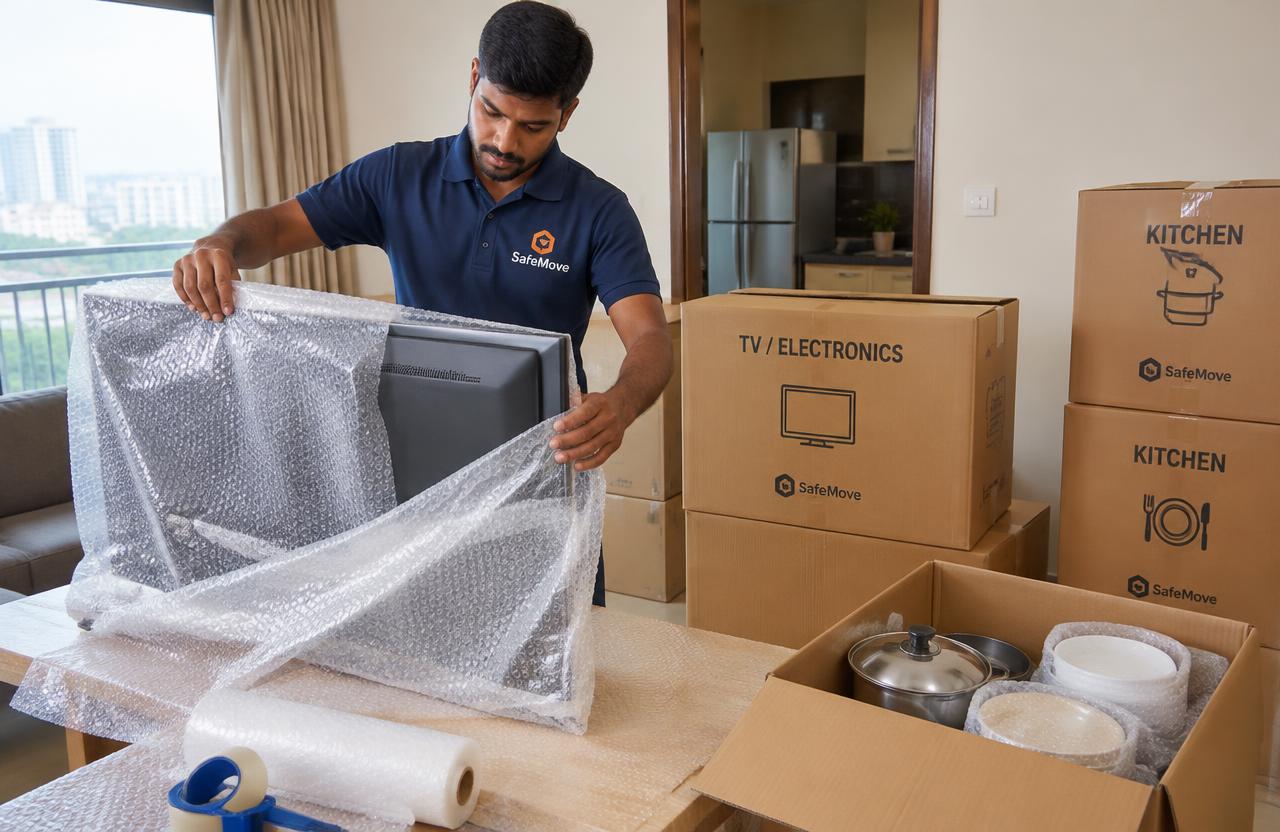
Photograph televisions, monitors and other delicate equipment before packing, including visible serial numbers where useful. Original fitted packaging is helpful when available; otherwise discuss cushioning, edge protection and secure positioning in the vehicle. Crockery needs individual wrapping and firm separation rather than loose newspaper stuffed above a stack. Tell the surveyor about glass tabletops, framed artwork and stone surfaces early, because these may need different materials and handling from ordinary dining chairs or folded clothing.
Ask who will disconnect appliances and whether specialist work requires a separate technician. Empty and dry the washing machine, follow the refrigerator manufacturer’s transport guidance, and keep screws from dismantled beds in labelled pouches. Carry jewellery, medicines, identity papers, laptops and irreplaceable documents yourself. Put chargers, drinking water, basic toiletries and a change of clothes in an accessible bag, so the first evening does not depend on locating a particular carton beneath the furniture.
Put the inventory, cover and payment terms in writing
The written quotation should identify the contracting business, both addresses, moving date, inventory and agreed work. Include floor numbers, lift availability, vehicle arrangements and the payment schedule. If communicating through a booking platform, establish which business will actually send the crew and issue receipts. Save the survey photographs and final quotation separately. Any later change, including additional furniture or a different delivery address, should be acknowledged before loading begins.
Transit insurance deserves more than a checkbox on a quotation. Ask for the insurer’s name, policy details, declared-value basis, exclusions, excess and claim procedure. Establish whether packing, loading and unloading damage is covered, rather than assuming all handling falls within the policy. A mover’s own damage promise is not necessarily insurance. Keep purchase evidence or reasonable value records for important items, and obtain the actual policy or cover document if you pay for insured transit.
Request a dated payment receipt and a GST invoice where applicable, with the supplier’s details and tax breakup. Count and sign the inventory at collection, retaining a copy that records pre-existing damage. For car or two-wheeler transport, ask what registration, insurance and other documents the carrier needs, and record the vehicle’s condition, fuel level and odometer. Share copies only as necessary; confirm any request for original documents and avoid leaving unrelated identity papers in the vehicle.
Check the business behind the booking
Shortlist packers and movers in Delhi by looking beyond a familiar-sounding name or a polished advertisement. Check the operating address, business identity and consistency of contact details across the quotation and invoice. Where a GST number is supplied, verify it through the official portal. Read recent reviews for specific descriptions of packing, delivery and complaint handling, not just star ratings. Reviews offer clues, not guarantees.
Request a physical or detailed video survey for a furnished household, and ask who supervises the actual job. Clarify whether the work is subcontracted and who remains responsible if the truck or labour comes from another operator. Reliable answers should address your staircase, fragile items and schedule rather than merely repeat a low price. Using Maps Near Me to identify businesses can help begin enquiries, but a directory listing should not be treated as verification or a recommendation.
Be cautious if a caller pressures you into an immediate large advance, refuses written terms or changes bank details without a clear explanation. Independently confirm payment instructions with the established business contact. Avoid handing over the full amount before the agreed service stages are completed, and never share an OTP for an unexplained payment request. If the crew demands an unexpected surcharge, ask for the written basis and contact the booking office before allowing the dispute to escalate.
Compare packers and movers in Delhi and confirm services directly with each business.
Manage Delhi weather and the handover
During Delhi’s hot months, arrange drinking water, shaded breaks and sensible handling periods for the crew. Keep heat-sensitive medicines and electronics with you where practical. Monsoon rain can leave loading areas slippery and expose cartons between the doorway and vehicle, so confirm waterproof outer protection and a covered truck. In winter, fog may slow travel, particularly on outward routes. Around Diwali, market crowds and busy family schedules can also affect access; confirm availability rather than assuming a normal working day.
Before loading, walk through the home with the supervisor and match cartons and furniture to the inventory. Photograph packed high-value items and confirm that fragile cartons will not sit beneath heavy furniture. Keep a clear path through the rooms and arrange care for children and pets away from lifting work. Check cupboards, lofts, balconies and utility spaces once loading ends. Take final meter photographs and complete the landlord or society handover separately from the crew’s transport paperwork.
At the new address, count packages before signing an unqualified delivery acknowledgement. Inspect accessible furniture surfaces and note visible damage or missing pieces on the delivery record, supported by photographs. Follow the provider’s and insurer’s reporting deadlines promptly, preserving packaging if a claim may need inspection. Ask the crew to position heavy furniture and finish agreed reassembly before leaving. Test appliances safely after the appropriate settling period or technician checks, rather than demanding immediate operation after transport.
NCR moves, longer routes and the first night
A relocation to Noida, Ghaziabad, Gurugram or Faridabad may feel local, yet it crosses into another state and can involve different access arrangements. Ask packers and movers in Delhi to quote the complete door-to-door journey, including destination labour and any route-related costs. Check society entry at both ends before choosing the departure time. A missed unloading slot can leave your belongings waiting in the vehicle even when the actual driving distance is relatively modest.
For Jaipur, Chandigarh or Dehradun, discuss whether loading and delivery can realistically fit the promised schedule without assuming a fixed arrival hour. For Mumbai, Pune or Bengaluru, ask if the consignment shares space and whether it will be transferred between vehicles. Shared loads may reduce cost but can bring wider delivery windows. Get a shipment reference, a responsible contact and clear storage terms, especially if you will travel separately or reach the destination after the truck.
Prepare the destination before the cartons arrive: confirm electricity and water, clear one sleeping area and identify where packaging can be collected responsibly. Update delivery addresses and arrange broadband according to the building’s available connections. Keep tenancy papers and society contacts accessible if security needs clarification. After unpacking, reconcile the inventory again and retain invoices until any claims are resolved. Review packers and movers in Delhi on specific work you observed, including how they handled problems, rather than on the initial sales conversation alone.
Packers and movers near me: India guide · Explore Delhi on Maps Near Me
Related searches for Delhi
- packers and movers in Delhi
- home shifting Delhi
- Dwarka packers and movers
- Rohini household relocation
- Lajpat Nagar moving services
- Karol Bagh furniture shifting
- Shahdara house movers
- Malviya Nagar packing services
- office relocation Delhi
- car transport Delhi
- Delhi to Noida movers
- Delhi to Gurugram shifting
- Delhi intercity relocation
- Delhi furniture packing
- transit insurance Delhi moving
Common questions
How early should I book a Delhi household move?
Begin enquiries around two to three weeks ahead if you can, and allow more choice for weekends, month-end dates or festival periods. Availability varies. Confirm possession, society permission and the inventory first, then obtain written acceptance of the moving date and expected reporting time.
Can a moving truck enter every Delhi residential lane?
No. Lane width, parked vehicles, overhead obstructions and applicable goods-vehicle restrictions can affect access. Send entrance photographs and ask the operator to assess both addresses. If a smaller shuttle or distant loading point is needed, agree its cost and handling arrangements in advance, including protection for items carried along the lane.
Is a Delhi to Gurugram move priced like a local shift?
Some operators may offer a local-style package, but do not assume its inclusions match a move within Delhi. Ask about the complete route, applicable charges, building access and unloading labour. Compare the final payable estimate for the same inventory rather than comparing only the advertised transport component.
What should I do if something arrives damaged?
Photograph the item, its wrapping and any visible impact before discarding packaging. Record the issue on the delivery paperwork and notify the business promptly in writing. If you have transit insurance, follow its claim requirements and deadlines separately. Keep the inventory, invoice, policy details and correspondence together to support your account.
Should I choose the cheapest quotation?
Only after checking that it covers the work you actually need. Compare packing materials, crew, access charges, reassembly, taxes where applicable and payment terms. A higher estimate may include services omitted elsewhere, while a low estimate can still be fair when its scope is clear. Ask each provider to resolve exclusions before paying an advance.
Need help finding movers?
Tell us about your move and the Maps Near Me team will get back to you.
Ready to compare movers in Delhi?
Ask each provider to quote for the same belongings, floors and dates.
Find Packers and Movers NowPackers and movers in other top cities
Maps Near Me is a directory, not a moving company. Confirm prices and terms with providers. Images are illustrations, not photos of listed businesses.